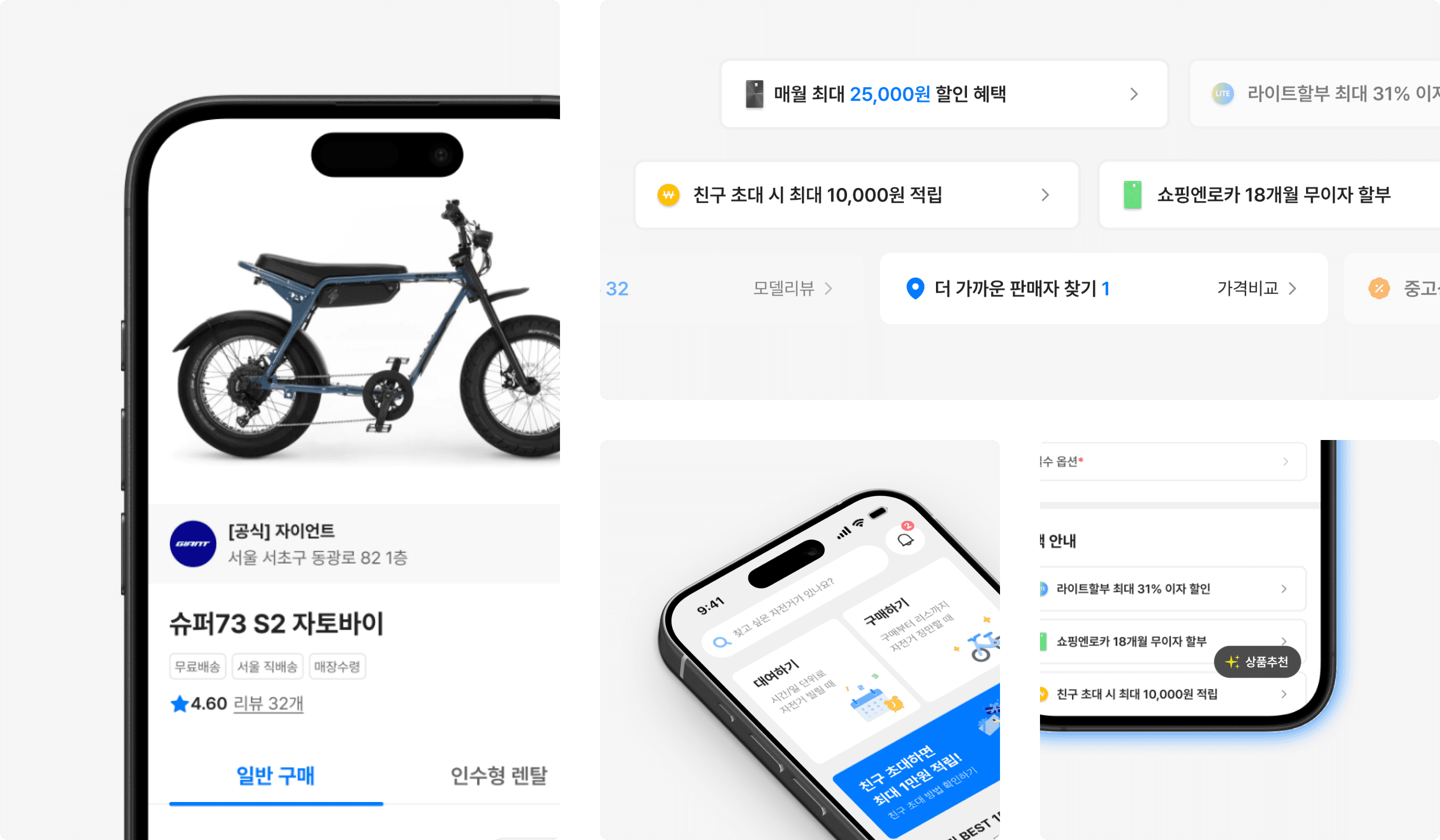
Purchase journey led to a +36% conversion lift
Instead of fixing one login screen, I redesigned the entire funnel to match how users actually behave.
Role
Senior Product Designer
Company
Lycle
Team
PM 1 / Designer 1 / Dev 2
Duration
2024 - 2025
+36%
Checkout conversion rate
6×
Option selection entry rate
+300%
Sign up increase
why it mattered.
A $700M market with a broken conversion engine.
Korea's bicycle market hit $700M in 2024. Lycle, an online-offline bicycle retail platform, was riding that wave with surging visitor numbers. But only 0.1% were completing a purchase. The gap between traffic and transaction was a structural breakdown with outsized business upside if solved.
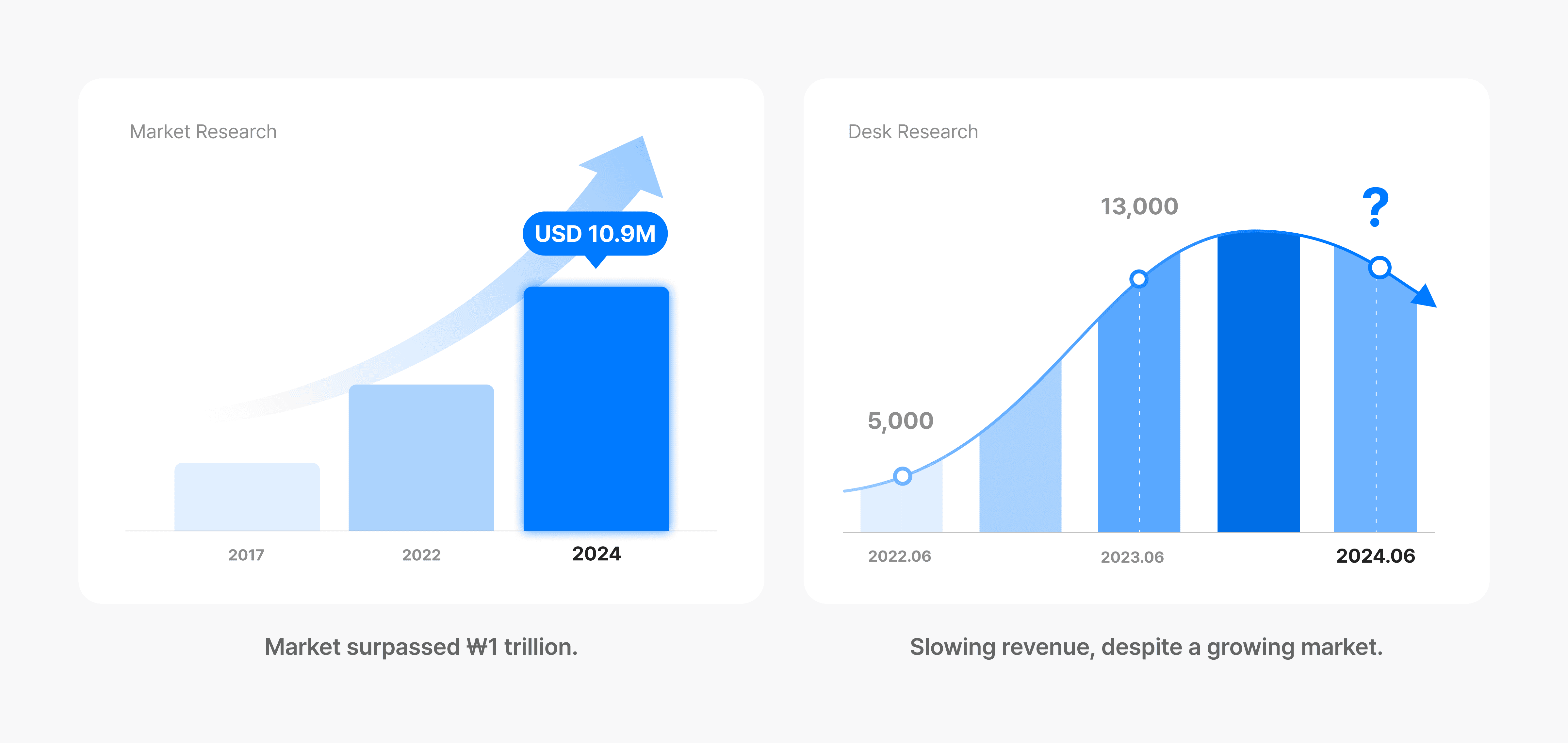
Market size + Traffic vs. 0.1% conversion visualization
how it was framed.
The team saw a leaky screen. I saw a leaky structure.
The PM identified login/signup as the highest drop-off point and proposed a targeted fix: redesign the page, add social login, lower friction. The logic was sound. But the behavior data told a different story. Users weren't struggling with the form. They were bouncing the instant the page appeared. That's not a UI problem. That's rejection of the step itself.
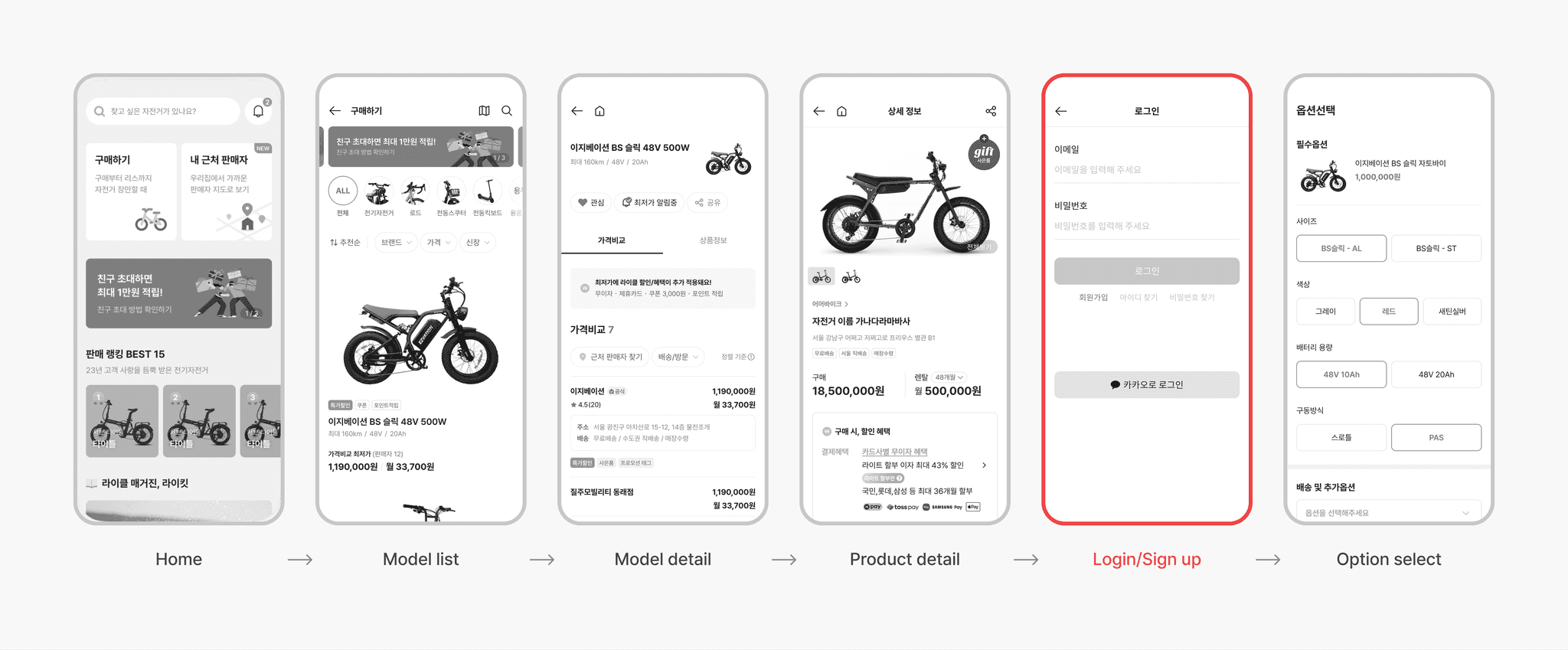
The team's focus: fix the login screen. My question: why is login placed here at all?
what the data revealed.
80% of buyers never walked the path we designed.
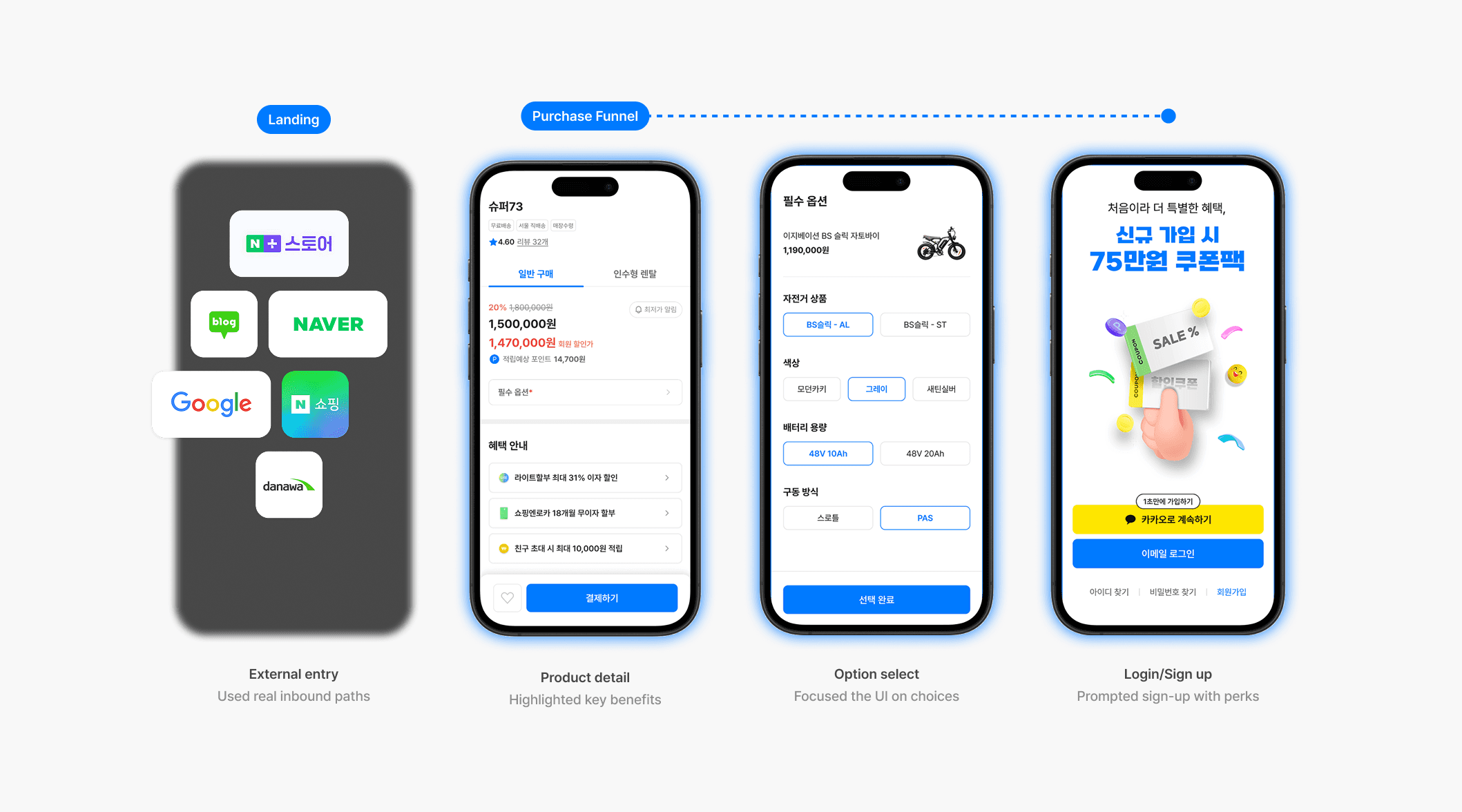
I requested a two-year funnel trace from the backend team: every completed purchase from 2022 to 2024, mapped to its entry point. Over 80% started directly from the product detail page. Korean bicycle shoppers search on Naver or Google, click a top-ranked result, and land straight on the product. We had designed an entire journey for an entry point that 8 out of 10 buyers never used.
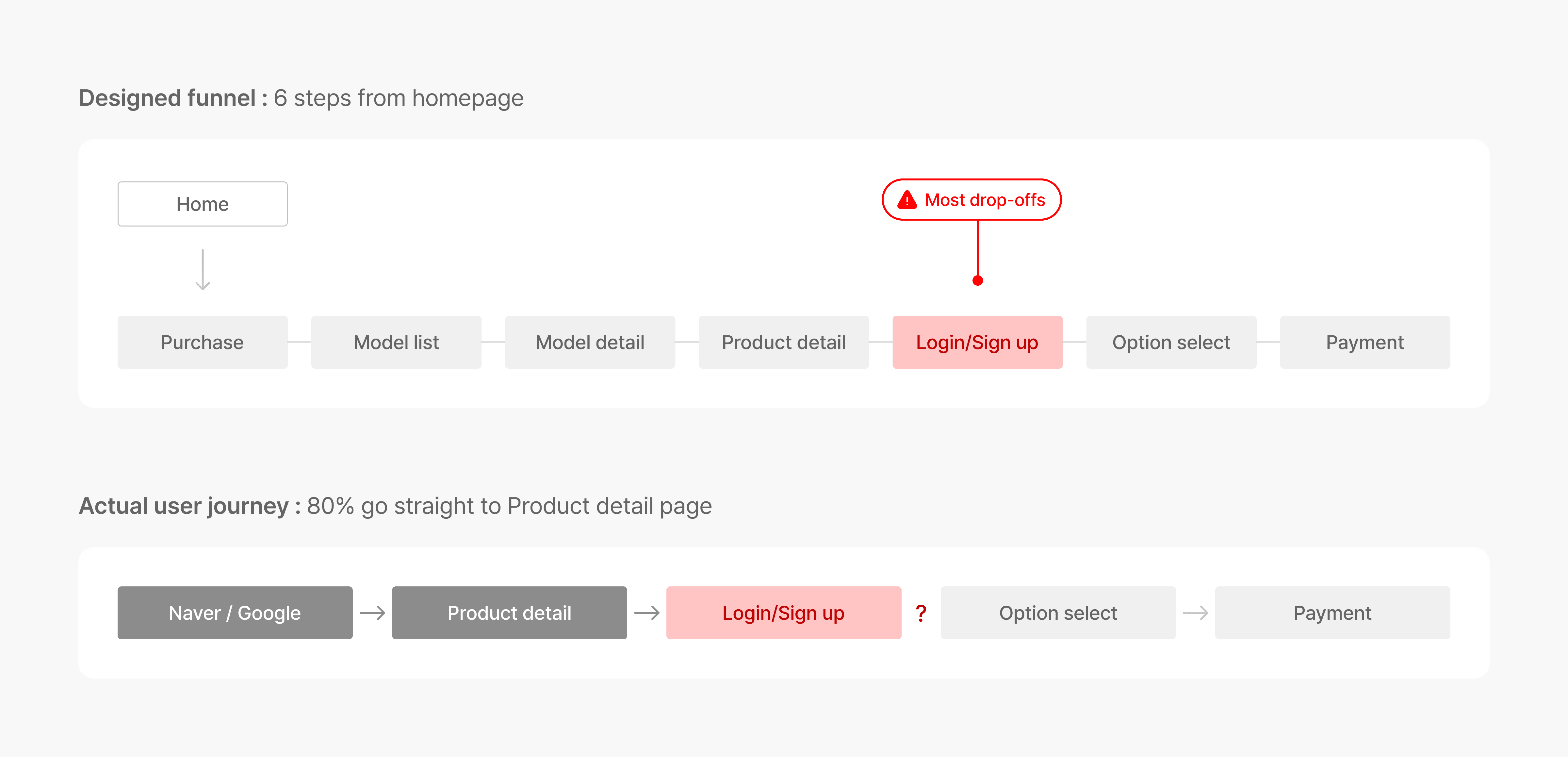
The funnel was built for a journey 80% of buyers never took.
how direction changed.
I brought the data to the meeting and let it speak.
I presented live SQL data via Claude to show the PM a critical flaw: with 80% of users skipping the homepage, redesigning its sub-pages had a hard limit on impact. To mitigate dev risk, I proposed a 3-phase roadmap starting with a 2-week, low-effort funnel reorder. Breaking the work into manageable chunks secured dev buy-in and established me as the project co-lead.
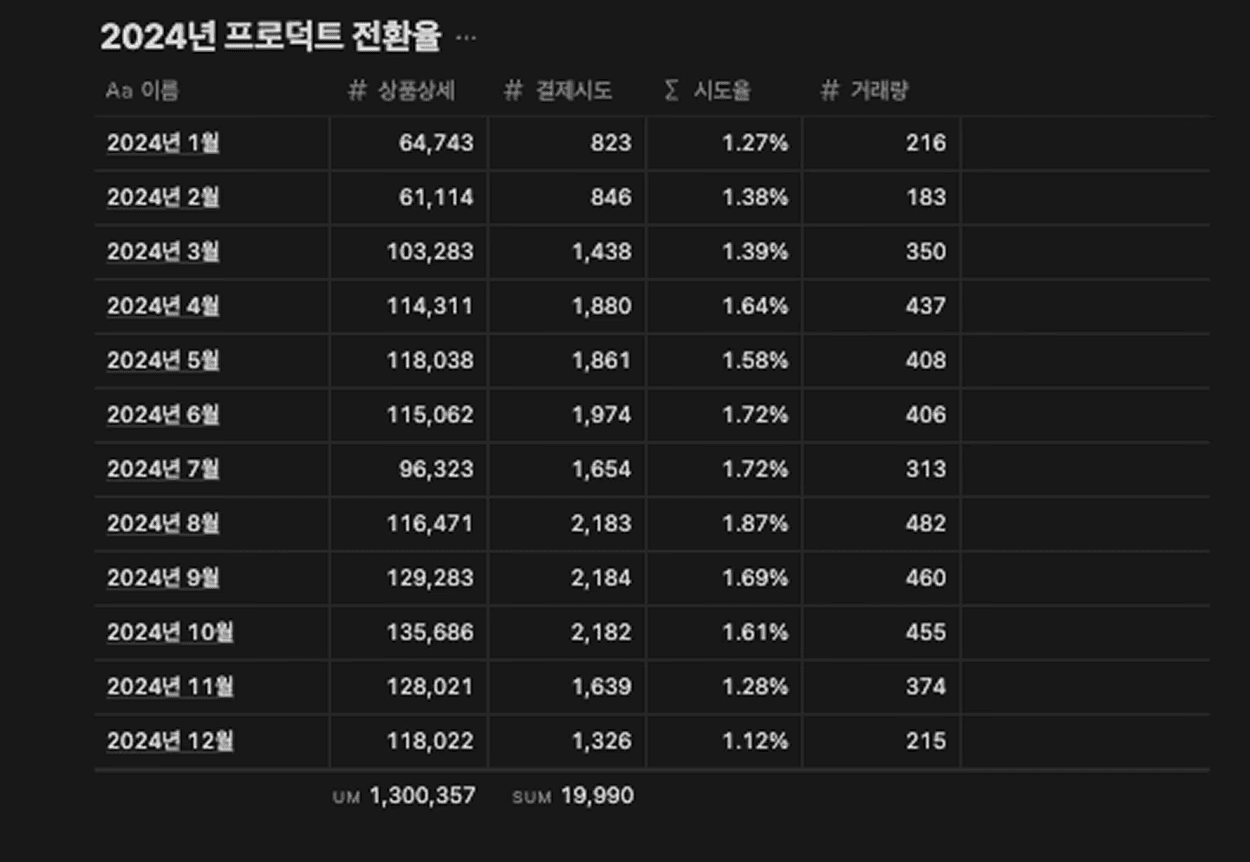
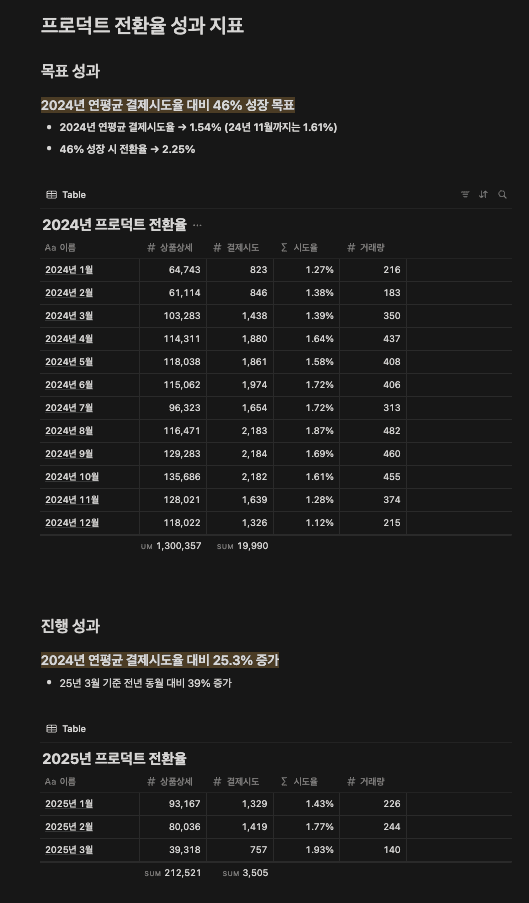
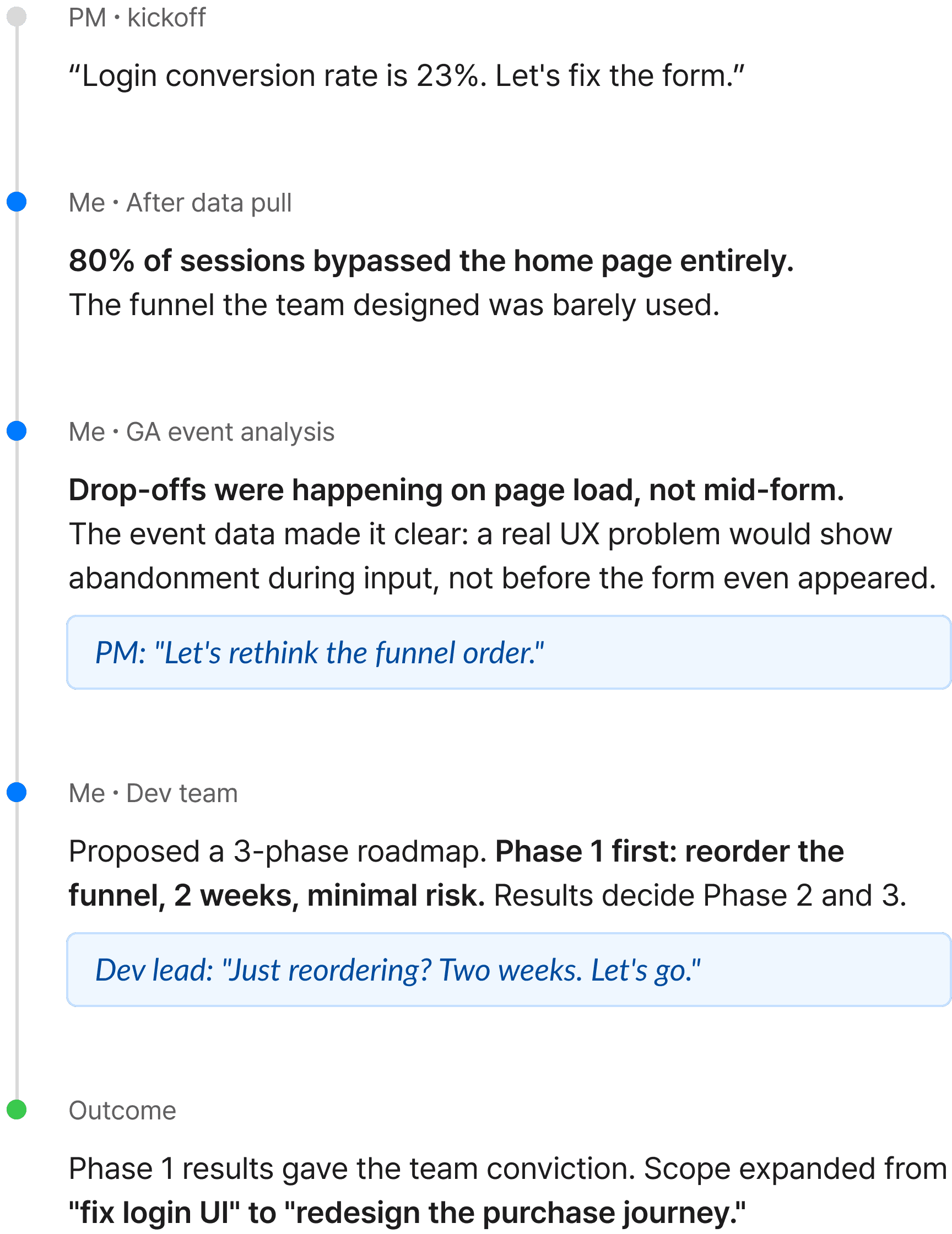
Data used in the product meeting
The argument wasn't "trust me." It was "here's the ceiling on the current plan."
Hypothesis
what i believed was causing it
Hypothesis 01
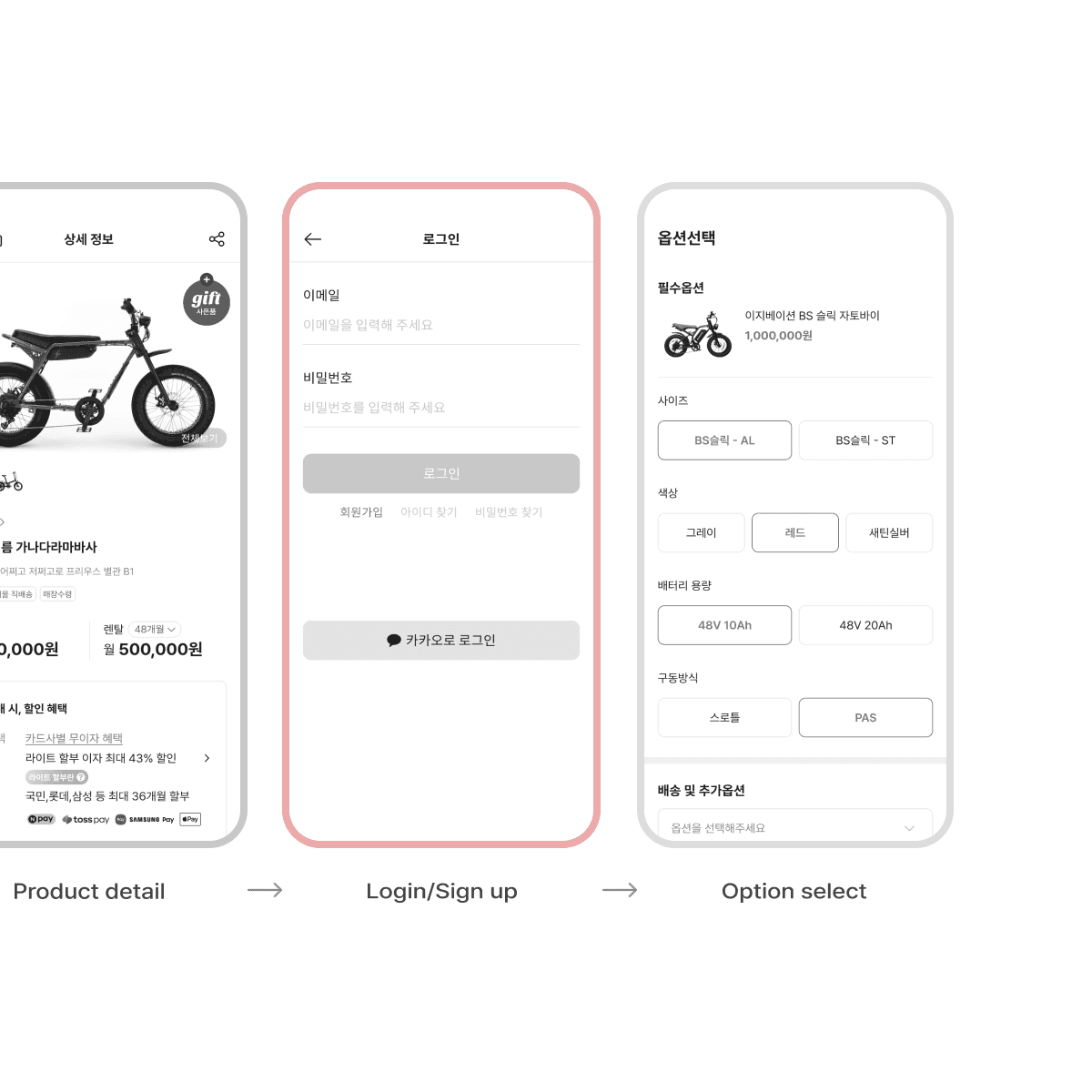
Users were asked to commit before they had a reason to.
The funnel forced users to login before they could even view options or prices. For high-intent traffic arriving from external searches, this premature demand for commitment became a massive friction point.
📊 GA Events
Users hit back the moment the login page appeared.
If UI was the issue, we'd see mid-form drop-offs.
💬 Interview
"I just wanted to check out the options and prices, but I wasn't ready to sign up for that, so I just left."
Funnel restructure
A/B test
Hypothesis 02
Benefit information isn't helping purchase decisions.
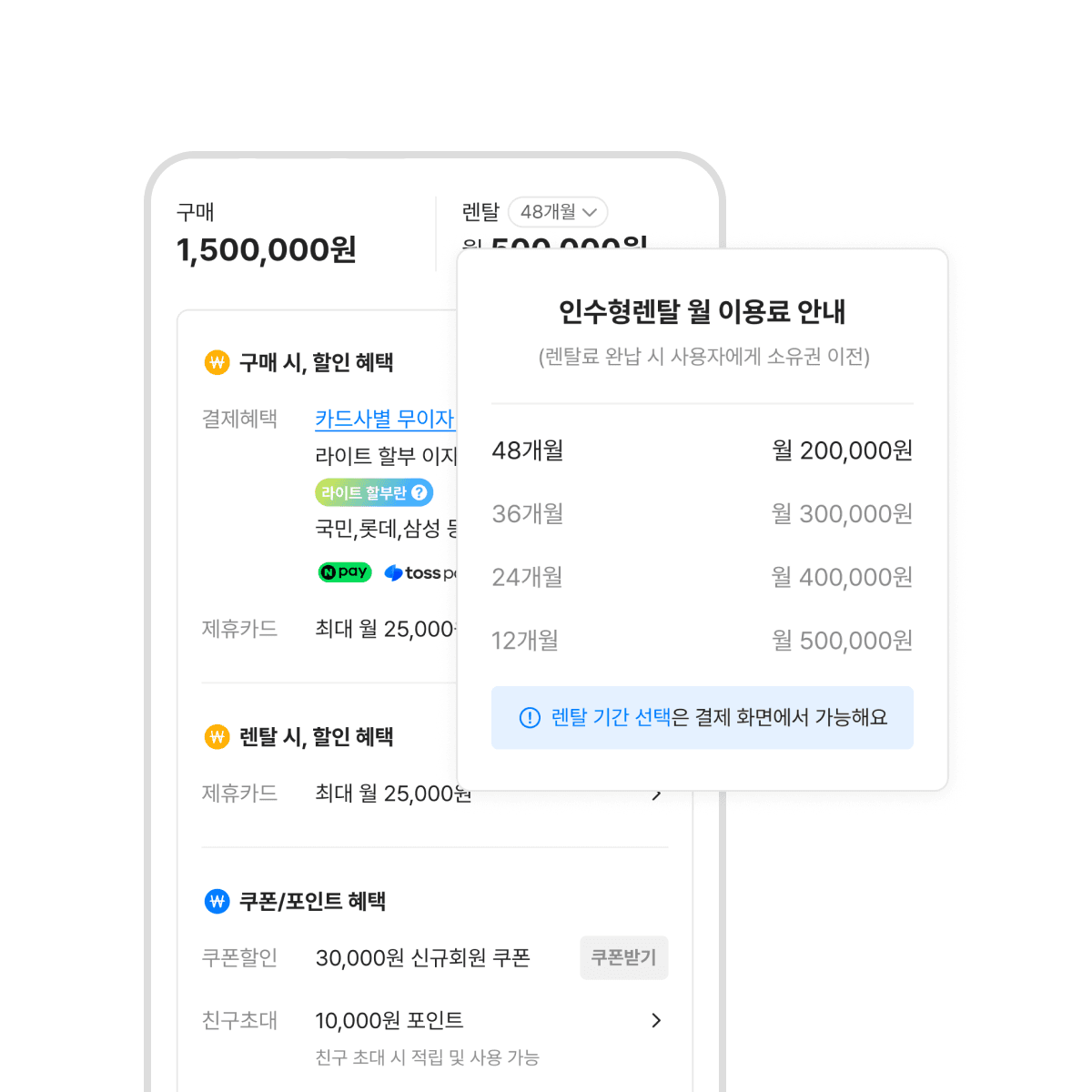
Lycle’s key benefits were hidden. Pricing and installment terms were crammed into modals, while benefit details sat behind separate text links. This poor visibility resulted in zero interaction and flooded the CS team with questions about information already on the page.
🔍 Heatmap
Extremely low click rate on benefit area.
Information existed but users couldn't find it.
📞 CS VOC
Repeat questions on existing page content
✍️ Context
Deep nesting and dropdowns added needless steps for the user.
Benefit UI restructure
usability test
Hypothesis 03
High-consideration buyers need guided confidence.
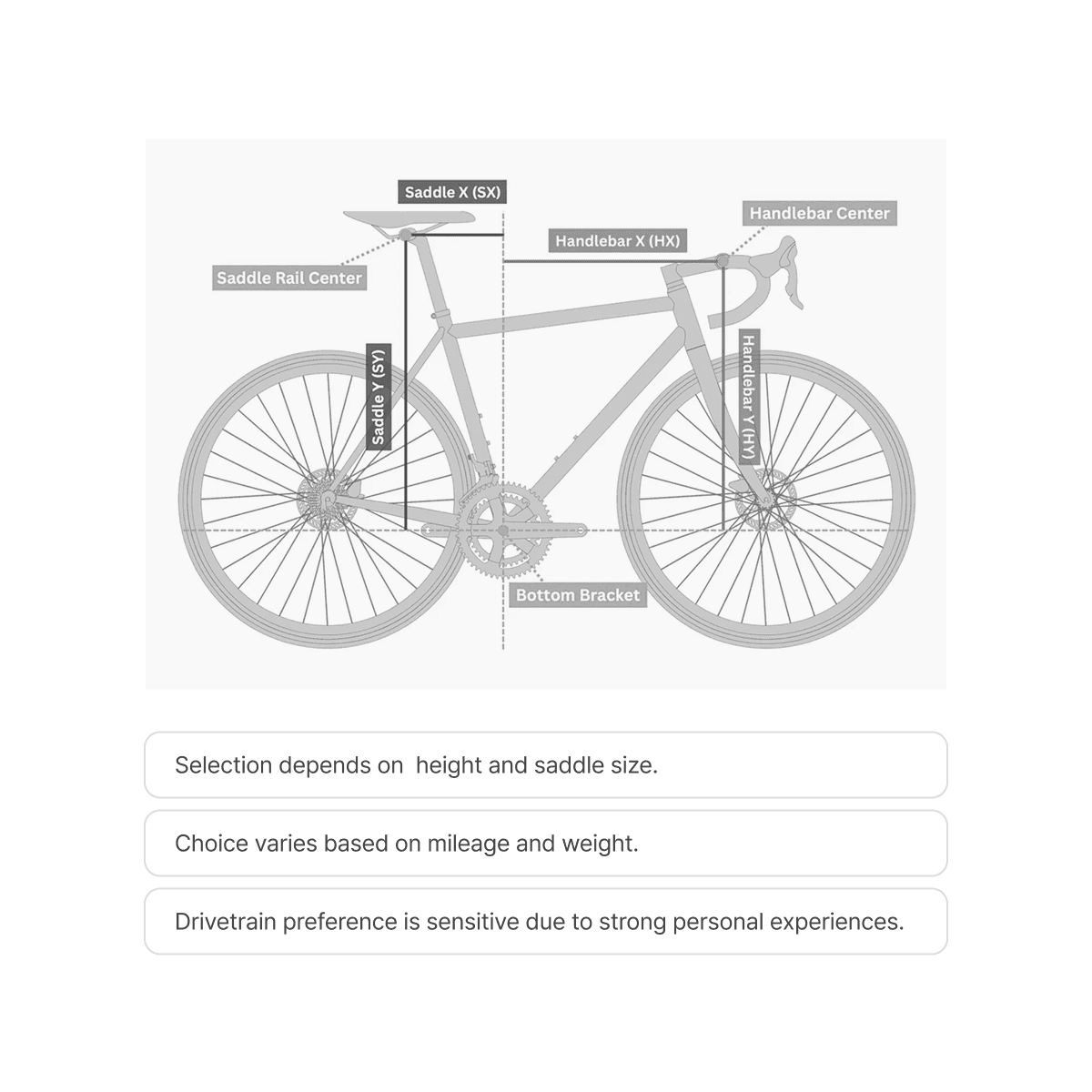
High-ticket bicycles require expert guidance. Without the natural support of in-store staff, online users had only one option: a contextless, untracked phone call to CS, forcing them to explain their needs from scratch.
💬 Interview
"I want a bike but don't know what to look for"
📞 CS VOC
Repeat questions on existing page content
🛍️ Experience
Online, users had to process all information alone with no guided support.
Personalization
A/B test
How did I solve it?
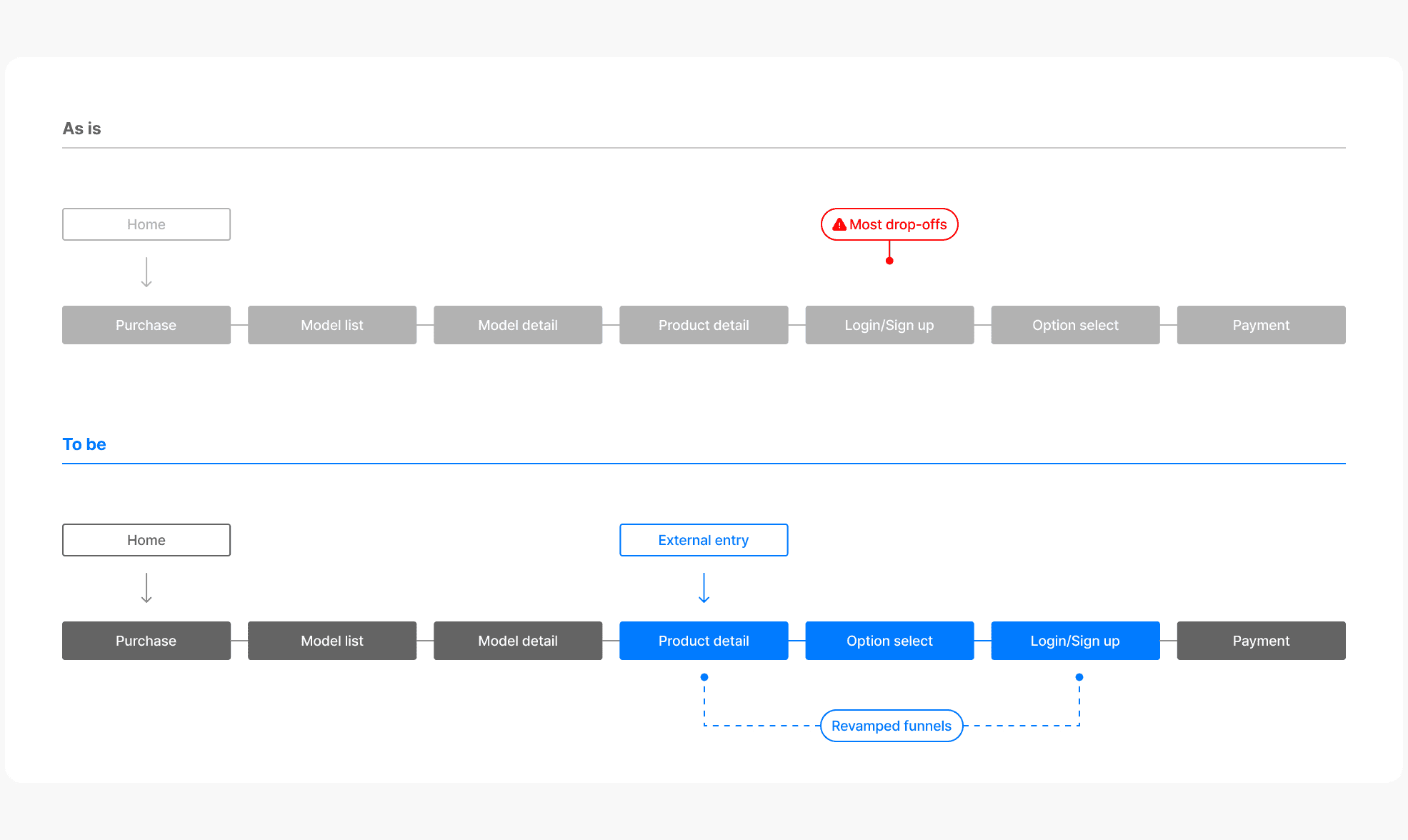
Solution 1 - Funnel Restructure
Move the wall to where it belongs.
Login moved from the middle of consideration to the threshold of payment. Users could now configure their purchase and see a final price before committing to an account.
Structuring
Focusing

Solution 2 - Benefit & Option UI
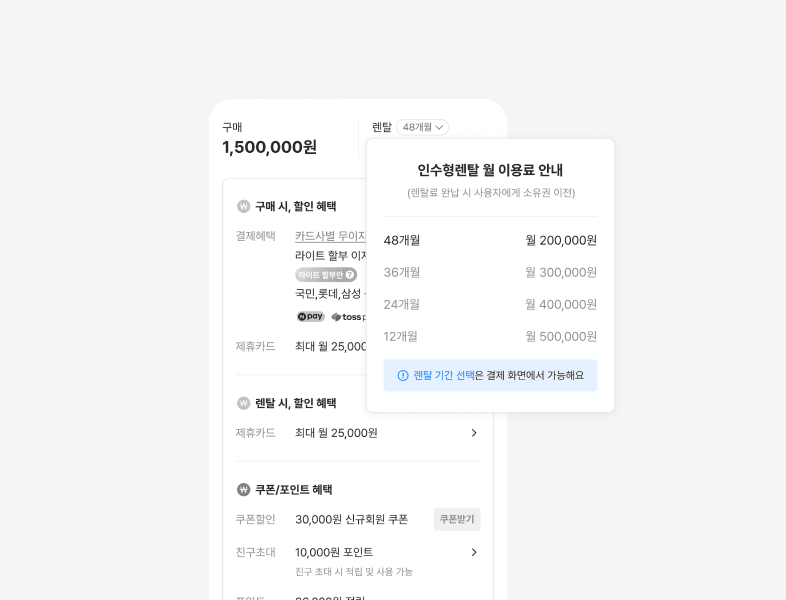
From nested and hidden to instant and scannable.
The overloaded popup modal was replaced with a tab-based interface that separated payment methods clearly. Users could now switch between purchase, rental, and installment options with a single tap, and see the price update instantly per term length. No ambiguity, no hidden information.
Benefit information was restructured into scannable cardsvisible at a glance. Content was rebuilt with a unified voice and tone standard.
->
Solution 3 - Personalization
Systemize the consultation, then scale it.
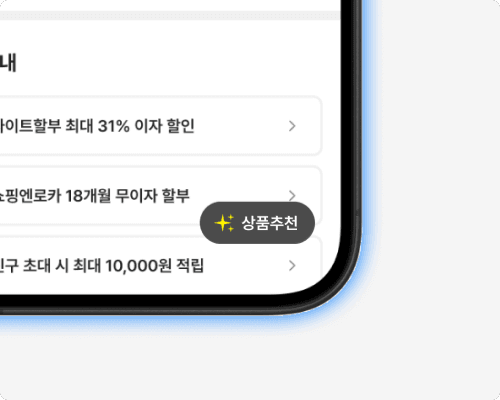
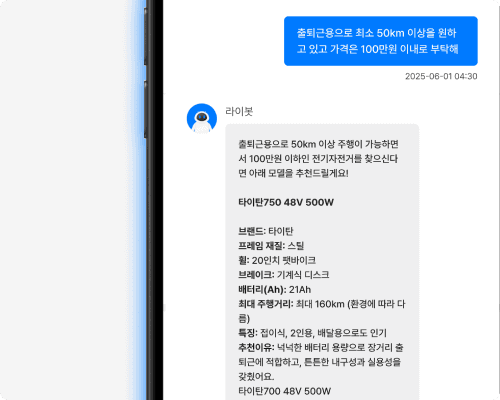
I built an in-flow consultation system that allowed users to submit context-rich questions anytime. To deflect basic inquiries, we layered in behavioral product recommendations. Crucially, this architecture was designed to be LLM-scalable. By structuring inquiry data and standardizing response patterns, it lays the groundwork for future AI automation while preserving human expertise for complex decisions.
how it was proven.
Funnel Restructure - A/B Test
Does moving login after options reduce drop-off?
14-day A/B test, 32K sessions via GrowthBook. Control kept login before option selection. Variant moved it after. The variant showed a clear lift in checkout conversion and a significant increase in option selection entry rate, confirming the structural hypothesis.
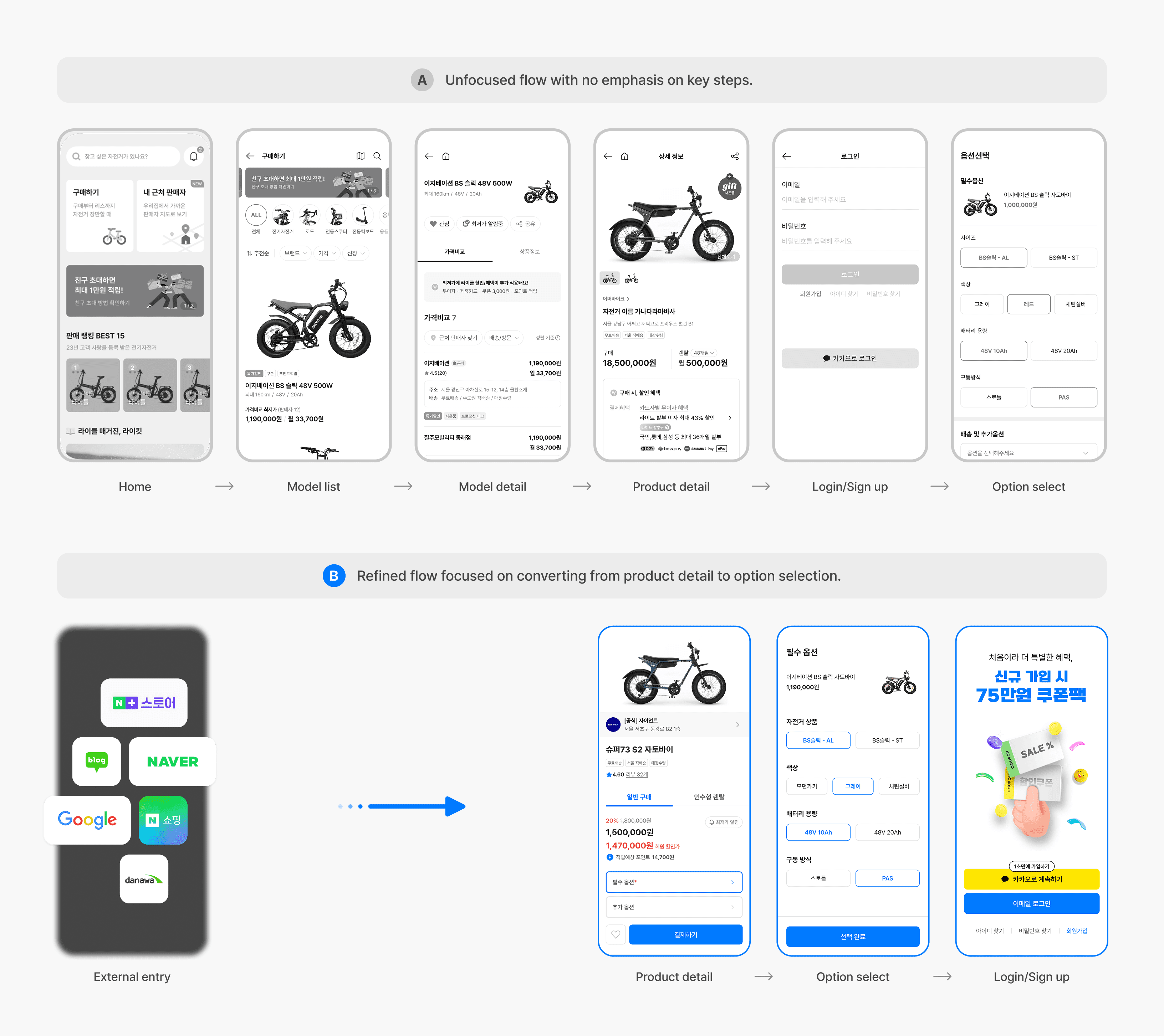
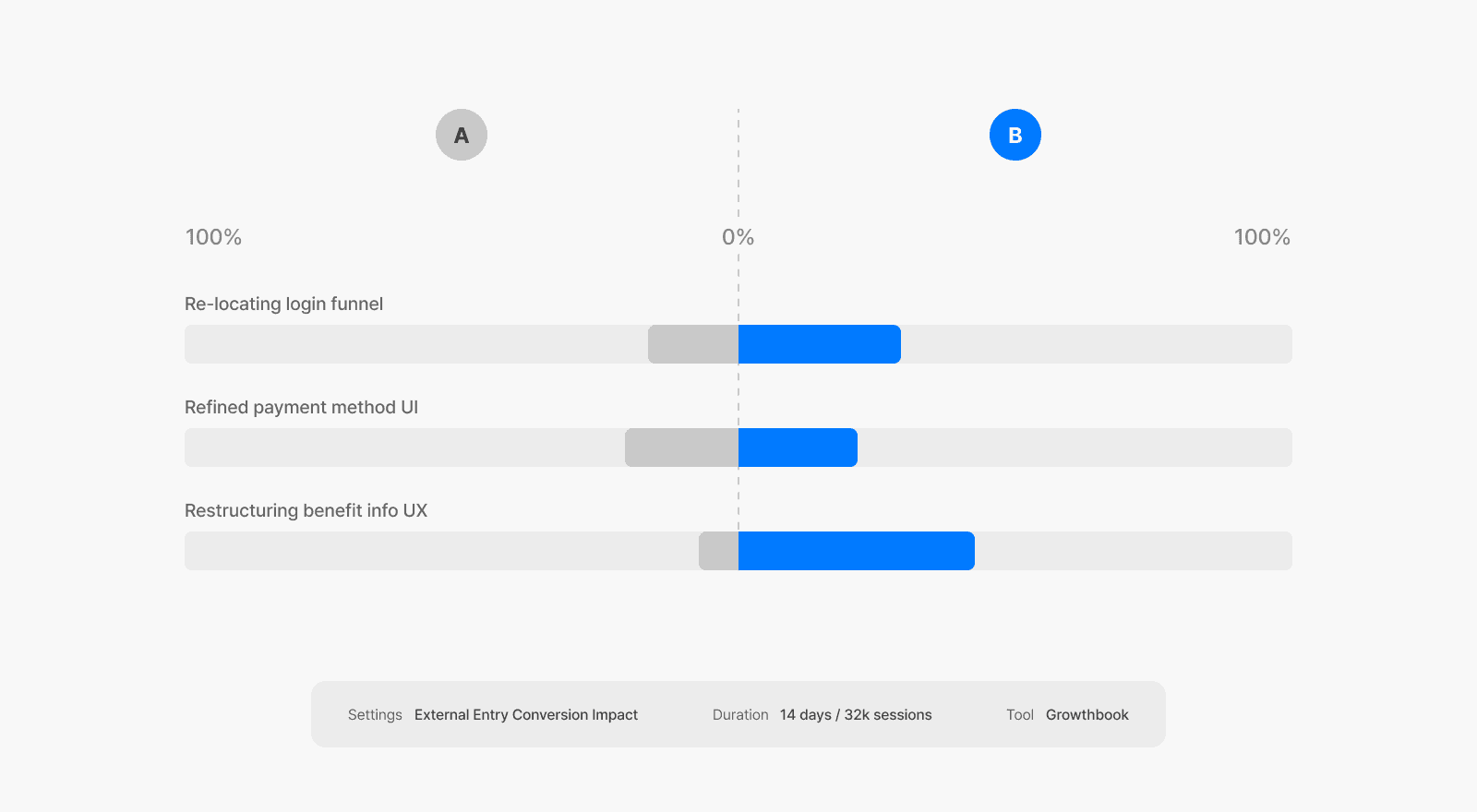
Before/after funnel flow · login step placement comparison
Benefit UI - Usability Testing
Can users actually find and use the benefit information now?
Usability testing came first. Representative tasks that previously required navigating to a separate page were completed in seconds with the new card layout. A/B test confirmed: benefit interaction rate increased +200%, and review clicks rose +66%.
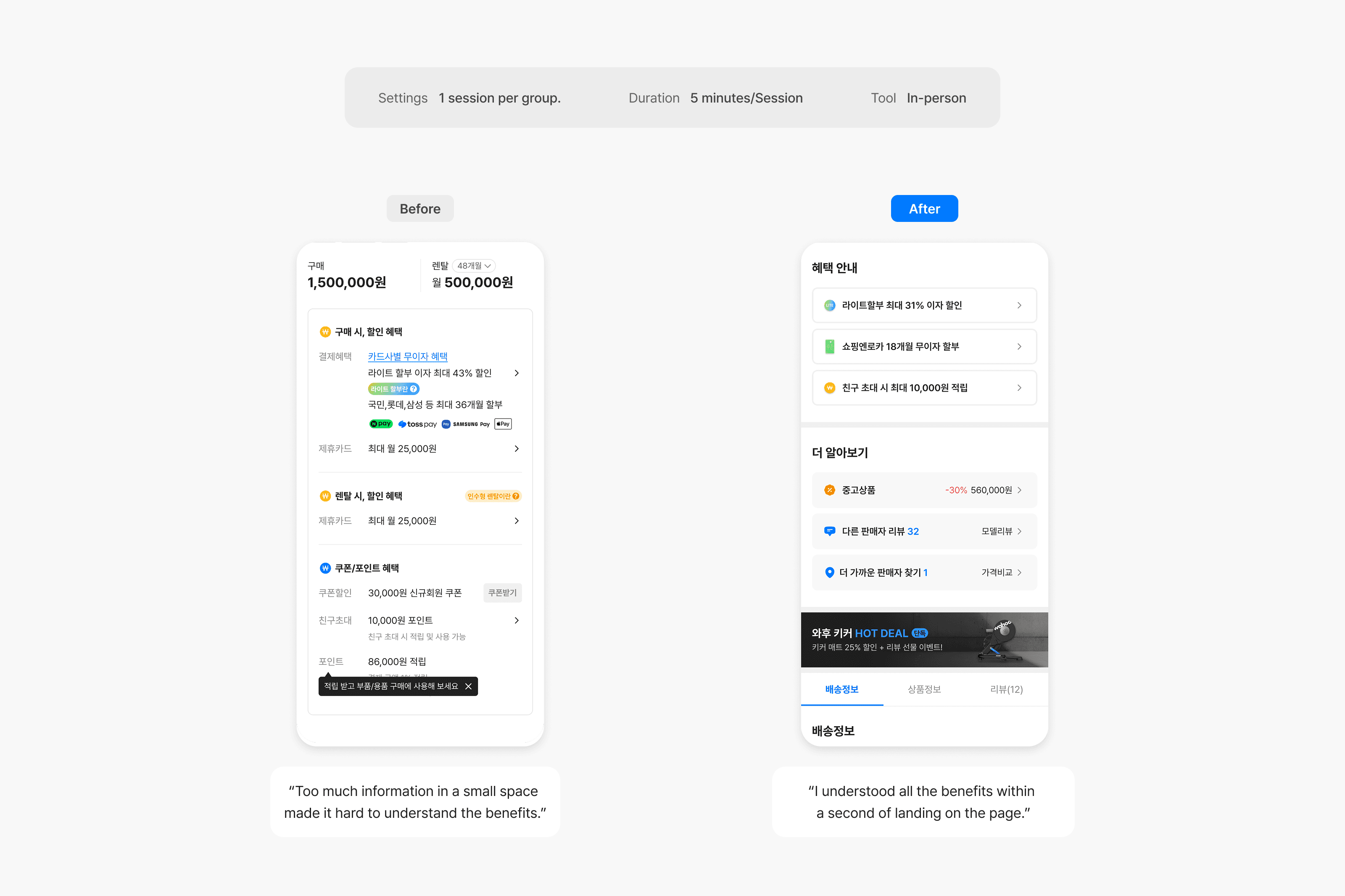
Benefit interaction +200%. Users found the information without effort.
Impact, and what I'd carry forward.
Checkout conversion rate
+36%
Option selection entry
+200%
Payment attempts
+19.5%
Sign-up rate
+500%
Consultation-to-purchase
+50%
Review engagement
+66%
All gains with zero additional marketing spend.
Lesson 01
Symptoms and causes are different problems.
The login drop-off was a real signal pointing upstream, not at itself. Distinguishing what is happening from why it's happening determined the entire scope of the solution.
Lesson 02
Structure alone isn't enough. Each step has to persuade.
Reordering the funnel removed a barrier. Conversion lifted because benefit clarity, AI support, and the right login timing improved in parallel.
Lesson 03
Design the system first. Automate second.
Jumping to AI automation before the process itself was designed left us with a tool nobody used. Building a structured consultation system first created the data and patterns needed to scale with LLM automation later.
what came next
This project opened a direct roadmap
Payment flow optimization, product-wide rollout of the UX writing system, and segment-based AI recommendation personalization. Each with its own hypothesis, test, and outcome.